Introduction
In the era of Industry 4.0, factory automation is set to transform manufacturing processes and redefine the future of industrial production. This article explores the key role of factory automation in shaping the future, driving innovation, and improving efficiency.
Outline
- Introduction
- Background
- Understanding Industry 4.0
- Advancement of Factory Automation
- Key Innovations Driving Factory Automation
- Incorporation and Interconnectivity
- Advantages of Factory Automation in Industry 4.0
- Difficulties and Contemplations
- Future Viewpoint
- Conclusion
- FAQs
Background
Industry 4.0, also known as the Fourth Industrial Revolution, represents a shift in factory automation. It involves integrating advanced technologies and data exchange. Factory automation is central to the fourth industrial revolution, playing a key role in creating smart factories and intelligent systems.
Understanding Industry 4.0
Industry 4.0 brings together physical and digital technologies, including the internet of things (IoT), artificial intelligence (AI), big data analytics, and cloud computing. It allows manufacturers to create interconnected systems capable of autonomous decision-making and adaptive responses to changing production conditions.
Advancement of Factory Automation
The development of factory automation has evolved over decades, from early mechanization to today’s complex systems. Traditional automation has advanced into cyber-physical systems, where physical processes are seamlessly integrated with digital technologies to enable real-time monitoring, control, and optimization.
Key Innovations Driving Factory Automation
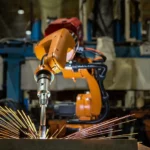
Key technologies driving factory automation in the fourth industrial revolution include robotics, sensors, actuators, AI algorithms, and advanced control systems. These innovations enable machines and production systems to communicate, collaborate, and adapt autonomously, leading to greater flexibility, agility, and responsiveness.
Incorporation and Interconnectivity
Fundamental to Industry 4.0 is the idea of incorporation and interconnectivity across the whole value chain, from providers to clients. Through interconnected frameworks and information trade stages, makers can accomplish consistent coordination of cycles, further developed asset portions, and improved cooperation inside and across associations.
Advantages of Factory Automation in Industry 4.0
Factory automation in the fourth industrial revolution offers numerous benefits, including increased productivity, efficiency and quality, reduced downtime, lower operational costs, and enhanced safety. By automating repetitive tasks and providing real-time insights, companies can optimize production processes and drive continuous improvement.
Difficulties and Contemplations
Despite its great potential, implementing factory automation in the fourth industrial revolution presents challenges, such as cybersecurity risks, workforce upskilling, data privacy concerns, and the need for interoperability standards. Addressing these challenges requires strategic planning, investment in technology infrastructure, and a culture of innovation and collaboration.
Future Viewpoint
The future of factory automation in the fourth industrial revolution is marked by continuous innovation and growth, driven by advancements in AI, IoT, edge computing, and digital twin technologies. As manufacturers embrace digital transformation, factory automation will play a crucial role in building integrated, resilient, and sustainable automation ecosystems.
Conclusion
In conclusion, factory automation is the foundation of industry 4.0, enabling manufacturers to embrace digital transformation and achieve new levels of productivity, efficiency and competitiveness. By leveraging automation, companies can build the smart factories of the future and drive innovation across the industrial landscape.
FAQs
1. What is industry 4.0, and how can it connect with manufacturing plant factory automation?
Industry 4.0 alludes to the mix of factory automation advancements into factory automation processes, with manufacturing plant factory automation assuming a focal part in understanding its goals of brilliant, interconnected creation frameworks.
2. What are a few key advances driving manufacturing plant factory automation in industry 4.0?
Key innovations incorporate mechanical technology, sensors, man-made intelligence, IoT, enormous information investigation, and high-level control frameworks, which empower independent direction and versatile factory automation processes.
3. What are the advantages of manufacturing plant factory automation in industry 4.0?
Manufacturing plant factory automation offers advantages like expanded efficiency, productivity, quality, and wellbeing, along with decreased free time and functional expenses.
4. What difficulties do producers confront while executing manufacturing plant automation in Industry 4.0?
Challenges incorporate network safety gambles, labor force upskilling, information protection concerns, and the requirement for interoperability norms to guarantee consistent joining across frameworks and cycles.
5. What does the future hold for manufacturing plant factory automation in industry 4.0?
The future outlook for factory automation in the fourth industrial revolution is characterized by continuous innovation and growth. Advancements AI, IoT, edge computing, and digital twin technologies will enable manufacturers to create agile, resilient, and sustainable automation ecosystems.