What's Hot
    Facebook Twitter Instagram
    Delta Sigma CompanyDelta Sigma Company
    • About
    • Electromagnetics
    • Factory Automation
    • Mixed Reality
    • Learn
      1. Factory Automation
      2. Electromagnetics
      3. Mixed Reality
      4. Course Catalogue
      5. About
      6. View All
      7. View All

      Using Machine Vision To Calibrate Countersink Depth On F-22 Aircraft

      Fuselage Rollover System

      Cargo Ramp Drill

      Automating An Old Drill & Rivet Machine

      Delta Sigma Company at AMTA 2024: Innovating Antenna Measurement Solutions

      A Squat Cylinder-Dihedral Dual Calibration Device for Compact Ranges at UHF

      Canonical Targets in R&D RCS Measurement Range Operations

      Using the Nyquist Sampling Criteria in Antenna and RCS Measurements

      How Gulfstream Paints Aircraft Using Mixed Reality

      Delta Sigma Company Announces Partnership With Zuken USA

      Delta Sigma Company at AMTA 2024: Innovating Antenna Measurement Solutions

      Advanced Robotics Automation Tools

      Advanced Robotics Automation Tools: Revolutionizing Factory Automation Services

      Robotics Automation: Tailored Solutions

      Robotics Automation: Tailored Solutions for Modern Businesses

      Expert Robotics Automation Services

      Expert Robotics Automation Services

      Delta Sigma Company at AMTA 2024: Innovating Antenna Measurement Solutions

      Advanced Robotics Automation Tools

      Advanced Robotics Automation Tools: Revolutionizing Factory Automation Services

      Robotics Automation: Tailored Solutions

      Robotics Automation: Tailored Solutions for Modern Businesses

      Expert Robotics Automation Services

      Expert Robotics Automation Services

      Delta Sigma Company at AMTA 2024: Innovating Antenna Measurement Solutions

      Advanced Robotics Automation Tools

      Advanced Robotics Automation Tools: Revolutionizing Factory Automation Services

      Robotics Automation: Tailored Solutions

      Robotics Automation: Tailored Solutions for Modern Businesses

      Expert Robotics Automation Services

      Expert Robotics Automation Services

      Using Machine Vision To Calibrate Countersink Depth On F-22 Aircraft

      Stacker / Drill Automation

      Using Machine Vision To Assemble The F-22 Fuselage

      Automating RCS Measurements For High-Speed Production Line In-Process Verification

    CONTACT
    Delta Sigma CompanyDelta Sigma Company
    Home»Learn»Precision Engineering with Industrial Control Systems
    • Factory Automation

    Precision Engineering with Industrial Control Systems

    Facebook
    Twitter
    LinkedIn
    Precision Engineering with Industrial Control Systems
    Precision Engineering with Industrial Control Systems

    Introduction

    In today’s manufacturing and industrial operations, precision is essential. Industrial control systems (ICS) play a crucial role in achieving and maintaining precision by enhancing performance and ensuring efficient operation. This article explores the importance of precision engineering and the role of ICS in improving performance across various industries.

    Outline

    1. Introduction
    2. Background
    3. Understanding Industrial Control Systems
    4. The Importance of Precision Engineering
    5. Key Components and Functionality of ICS
    6. Applications Across Industries
    7. Advantages and Challenges
    8. Future Trends in Precision Engineering
    9. Conclusion
    10. FAQs

    Background

    The growth of industrial automation has paved the way for precision engineering, where tiny adjustments and precise control are crucial for optimal performance. Understanding the history and development of precision engineering helps explain the essential role that industrial control systems play in this field.

    Understanding Industrial Control Systems (ICS)

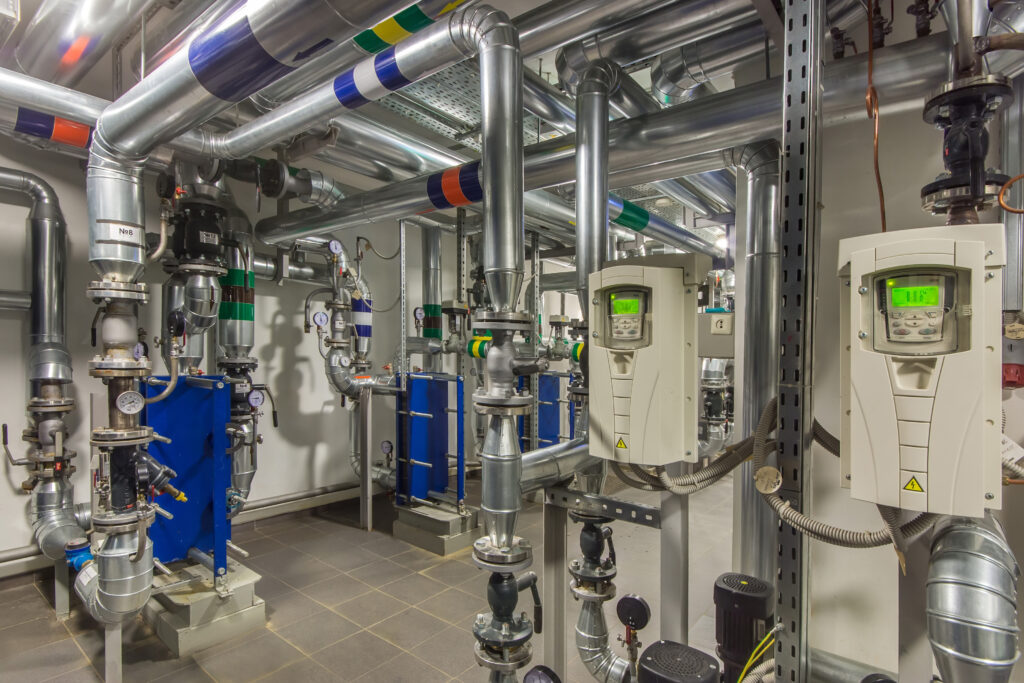
    Industrial control systems include a variety of hardware and software designed to monitor, control, and optimize industrial processes. They use sensors, actuators, controllers, and communication networks to enable real-time data collection, analysis, and decision-making. This allows for precise control and optimization of machines and equipment.

    The Importance of Precision Engineering

    Accuracy design focuses on achieving elevated degrees of exactness, repeatability, and consistency in assembling and industrial processes. It is fundamental for satisfying rigid quality guidelines, boosting proficiency, limiting waste, and guaranteeing item dependability and execution.

    Key Components and Functionality of ICS

    Key parts of industrial control systems incorporate sensors, actuators, programmable logic controllers (PLCs), human-machine connection point (HMI) gadgets, and correspondence organizations. These parts cooperate to gather information, execute control calculations, and establish connections with administrators to guarantee exact control and streamlining of industrial processes.

    Applications Across Industries

    Industrial control systems track applications across different ventures, including fabricating, cars, aviation, drugs, and gadgets. They are used for errands, for example, process control, quality affirmation, accuracy machining, mechanical gathering, and material taking care of, adding to expanded efficiency, dependability, and intensity.

    Advantages and Challenges

    The reception of ICS offers various benefits, including:

    • Upgraded accuracy and exactness.
    • Further developed proficiency and efficiency.
    • Upgraded, unwavering quality and execution.
    • Diminished squander and improved.

    However, implementing and managing ICS also comes with challenges, such as:

    • Intricacy in system reconciliation and setup.
    • Network safety weaknesses and dangers.
    • Abilities, holes, and labor force availability.
    • Administrative consistency and principle adherence.

    Future Trends in Precision Engineering

    Future trends in precision engineering include:

    • Reconciliation with arising advancements like artificial intelligence (AI) and the internet of things (IoT) for upgraded computerization, navigation, and streamlining.
    • Reception of cutting-edge detection and control advancements for constant checking, versatile control, and prescient support.
    • Improvement of accuracy-producing strategies, for example, added substance assembly and nanotechnology for accomplishing exceptional degrees of exactness and productivity.

    Conclusion

    Precision engineering, enabled by industrial control systems, is essential for achieving optimal performance, efficiency, and reliability in modern industrial operations. By using the capabilities of industrial control systems and adopting advancements in precision engineering, industries can stay competitive, meet growing market demands, and drive innovation in a fast-changing environment.

    FAQs

    1. What are industrial control systems (ICS), and how do they work?

    Industrial control systems incorporate arrangements that screen, control, and advance industrial processes utilizing equipment and programming parts like sensors, actuators, regulators, and correspondence organizations.

    2. Why is precision engineering important in industrial operations?

    Accuracy in design guarantees elevated degrees of precision, repeatability, and consistency, which are fundamental for fulfilling quality guidelines, amplifying effectiveness, and guaranteeing item dependability and execution.

    3. What are some common applications for industrial control systems?

    Applications include process control, quality assurance, precision machining, robotic assembly, and material handling across various industries.

    4. What challenges do industries face when implementing industrial control systems?

    Challenges incorporate system intricacy, network protection gambles, ability holes, and administrative consistency.

    Share.

    Related Posts

    Delta Sigma Company at AMTA 2024: Innovating Antenna Measurement Solutions

    Services

    A photo of a Compact Antenna Test Range (CATR) facility. The image shows a shielded room with an anechoic chamber, a robotic positioning system, and various measurement equipment, including spectrum analyzers and network analyzers. The control room can be seen through the glass window, where engineers and technicians can monitor the test results. CATR is used for testing and evaluating the performance of small and medium-sized antennas.

    RCS and Antenna Measurement Systems

    "An image of a modern factory utilizing automation services. The photo shows a variety of machines and equipment including robots, conveyor belts, and control systems. In the background, you can see a control room, where operators monitor and control the automation system. The factory floor is clean and well-lit, with workers in safety gear. The automation services aim to improve efficiency, reduce costs, and increase the speed and accuracy of the production process.

    Engineer to Order

    An airplane in the foreground with a projected paint masking pattern overlay, being assisted by ProjectionWorks technology. The technology is used to improve efficiency and accuracy in the paint masking process.

    Digital Thread / Digital Twin

    Editor’s Pick

    Using Machine Vision To Calibrate Countersink Depth On F-22 Aircraft

    Fuselage Rollover System

    Cargo Ramp Drill

    MENU

    • RADAR CROSS SECTION
    • FACTORY AUTOMATION
    • MIXED REALITY

    DISCOVER

    • ABOUT
    • LEARN
    • CAREERS
    • SITEMAP

    CONTACT US

    ADDRESS:
    2125 Barrett Park Dr #110
    Kennesaw, GA 30144

    PHONE:
    (770) 575 – 5100

    EMAIL
    info@deltasigmacompany.com

    FOLLOW US

    • Facebook
    • LinkedIn
    • Twitter
    • YouTube

    PRIVACY

    COPYRIGHT 2024 DELTA SIGMA COMPANY ALL RIGHTS RESERVED.

    Type above and press Enter to search. Press Esc to cancel.