What's Hot
    Facebook Twitter Instagram
    Delta Sigma CompanyDelta Sigma Company
    • About
    • Electromagnetics
    • Factory Automation
    • Mixed Reality
    • Learn
      1. Factory Automation
      2. Electromagnetics
      3. Mixed Reality
      4. Course Catalogue
      5. About
      6. View All
      7. View All

      Using Machine Vision To Calibrate Countersink Depth On F-22 Aircraft

      Fuselage Rollover System

      Cargo Ramp Drill

      Automating An Old Drill & Rivet Machine

      Delta Sigma Company at AMTA 2024: Innovating Antenna Measurement Solutions

      A Squat Cylinder-Dihedral Dual Calibration Device for Compact Ranges at UHF

      Canonical Targets in R&D RCS Measurement Range Operations

      Using the Nyquist Sampling Criteria in Antenna and RCS Measurements

      How Gulfstream Paints Aircraft Using Mixed Reality

      Delta Sigma Company Announces Partnership With Zuken USA

      Delta Sigma Company at AMTA 2024: Innovating Antenna Measurement Solutions

      Advanced Robotics Automation Tools

      Advanced Robotics Automation Tools: Revolutionizing Factory Automation Services

      Robotics Automation: Tailored Solutions

      Robotics Automation: Tailored Solutions for Modern Businesses

      Expert Robotics Automation Services

      Expert Robotics Automation Services

      Delta Sigma Company at AMTA 2024: Innovating Antenna Measurement Solutions

      Advanced Robotics Automation Tools

      Advanced Robotics Automation Tools: Revolutionizing Factory Automation Services

      Robotics Automation: Tailored Solutions

      Robotics Automation: Tailored Solutions for Modern Businesses

      Expert Robotics Automation Services

      Expert Robotics Automation Services

      Delta Sigma Company at AMTA 2024: Innovating Antenna Measurement Solutions

      Advanced Robotics Automation Tools

      Advanced Robotics Automation Tools: Revolutionizing Factory Automation Services

      Robotics Automation: Tailored Solutions

      Robotics Automation: Tailored Solutions for Modern Businesses

      Expert Robotics Automation Services

      Expert Robotics Automation Services

      Using Machine Vision To Calibrate Countersink Depth On F-22 Aircraft

      Stacker / Drill Automation

      Using Machine Vision To Assemble The F-22 Fuselage

      Automating RCS Measurements For High-Speed Production Line In-Process Verification

    CONTACT
    Delta Sigma CompanyDelta Sigma Company
    Home»Learn»Innovation Unleashed: Transforming Milling with CNC Mills
    • Factory Automation

    Innovation Unleashed: Transforming Milling with CNC Mills

    Facebook
    Twitter
    LinkedIn
    Innovation Unleashed: Transforming Milling with CNC Mills
    Innovation Unleashed: Transforming Milling with CNC Mills

    Introduction

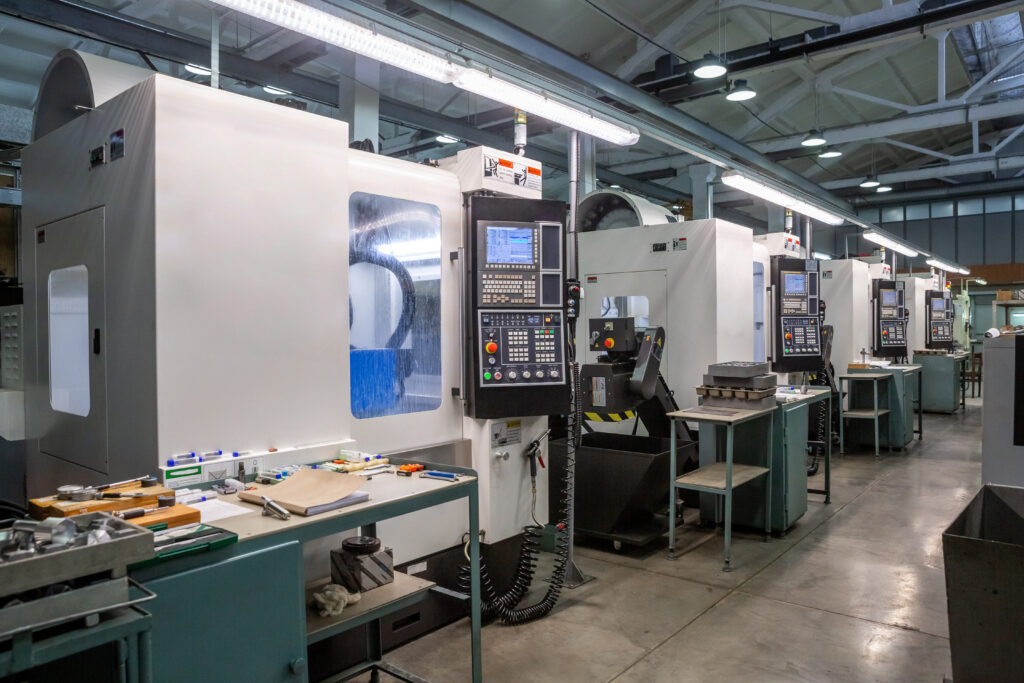
    CNC (Computer Numerical Control) mill systems have transformed the manufacturing industry, providing excellent precision, efficiency, and flexibility in milling operations. This article explores the significant impact of CNC mills on manufacturing processes and their role in driving innovation in the industry.

    Outline

    1. Introduction
    2. Background
    3. Understanding CNC Mill Systems
    4. Advantages of CNC Milling
    5. Applications Across Industries
    6. Future Trends and Innovations
    7. Conclusion
    8. FAQs

    Background

    Processing is an essential CNC mill process used to deliver many parts across different enterprises. Customary processing strategies include manual activity, which is tedious and restricted in accuracy. Be that as it may, the coming of the CNC mill has changed the scene of processing, offering mechanized control and high-level capacities for upgraded efficiency and quality.

    Understanding CNC Mill Systems

    Operators can use CNC mills, which are computer-controlled machines, for a wide range of milling activities with high accuracy and repeatability. These machines follow CNC mill instructions to control the movement of cutting tools across workpieces, allowing for the easy machining of complex geometries and intricate features.

    Advantages of CNC Milling

    The CNC mill offers a few benefits over customary processing strategies, including:

    Accuracy: A CNC mill can accomplish micron-level precision, guaranteeing that parts meet tight resilience and particulars.

    CNC mill: With CNC mill activity, CNC mills require negligible administrator interference, prompting expanded efficiency and diminished work costs.

    Adaptability: Operators can use CNC mills to mill various materials, including metals, plastics, and composites, making these versatile machines suitable for many applications.

    Applications Across Industries

    The CNC mill tracks down applications across different enterprises, including aviation, auto, clinical, and gadgets. From delivering complex airplane parts to making many-sided molds for clinical gadgets, the CNC mill assumes an essential role in assembling excellent parts with accuracy and proficiency.

    Future Trends and Innovations

    Continuous development and innovation will mark the future of the CNC mill. Key patterns include:

    Coordination of artificial intelligence and AI: artificial intelligence-controlled calculations enhance processing processes, foresee instrument wear, and further develop productivity.

    Added substance Assembling Reconciliation: Half and half CNC mills consolidate subtractive and added substance fabricating methods for upgraded plan opportunity and material use.

    Brilliant Assembling Arrangements: Industry 4.0 drives coordination of CNC mills with IoT sensors and information investigation for continuous checking and enhancement of CNC mill activities.

    Conclusion

    CNC mills have revolutionized manufacturing by providing exceptional precision, efficiency, and flexibility in milling operations. As manufacturing continues to evolve, CNC mills will remain at the forefront of innovation, improving productivity, quality, and cost-effectiveness.

    FAQs

    1. What types of milling operations can be performed using CNC mill systems?

    A CNC mill can perform an extensive variety of processing tasks, including face processing, end processing, opening processing, boring, tapping, and forming.

    2. How do CNC mill systems ensure accuracy and precision in CNC mills? 

    CNC mills use high-accuracy ball screws, straight aides, and servo engines, alongside cutting-edge control calculations, to accomplish exactness and accuracy in CNC mill tasks.

    3. What are some common challenges faced when using CNC mill systems?

    Normal difficulties incorporate apparatus breakage, gab, workpiece vibration, and surface completion quality. Tending to these difficulties requires streamlining cutting boundaries, instrument choice, and machine settings.

    4. How can CNC mill systems be integrated into existing manufacturing workflows?

    Operators can integrate the CNC mill with computer-aided design (CAD) and computer-aided manufacturing (CAM) software for seamless communication between design and milling processes. Furthermore, users can connect a CNC mill with various machines for automated production, planning, and scheduling.

    5. What role does operator training play in maximizing the capabilities of CNC mill systems?

    Administrator preparation is fundamental for guaranteeing the protection and effective activity of the CNC mill. Appropriate preparation permits administrators to comprehend machine capabilities, programming methods, tooling methodologies, and investigating methodology, subsequently amplifying efficiency and limiting margin time.

    Share.

    Related Posts

    Delta Sigma Company at AMTA 2024: Innovating Antenna Measurement Solutions

    Services

    A photo of a Compact Antenna Test Range (CATR) facility. The image shows a shielded room with an anechoic chamber, a robotic positioning system, and various measurement equipment, including spectrum analyzers and network analyzers. The control room can be seen through the glass window, where engineers and technicians can monitor the test results. CATR is used for testing and evaluating the performance of small and medium-sized antennas.

    RCS and Antenna Measurement Systems

    "An image of a modern factory utilizing automation services. The photo shows a variety of machines and equipment including robots, conveyor belts, and control systems. In the background, you can see a control room, where operators monitor and control the automation system. The factory floor is clean and well-lit, with workers in safety gear. The automation services aim to improve efficiency, reduce costs, and increase the speed and accuracy of the production process.

    Engineer to Order

    An airplane in the foreground with a projected paint masking pattern overlay, being assisted by ProjectionWorks technology. The technology is used to improve efficiency and accuracy in the paint masking process.

    Digital Thread / Digital Twin

    Editor’s Pick

    Using Machine Vision To Calibrate Countersink Depth On F-22 Aircraft

    Fuselage Rollover System

    Cargo Ramp Drill

    MENU

    • RADAR CROSS SECTION
    • FACTORY AUTOMATION
    • MIXED REALITY

    DISCOVER

    • ABOUT
    • LEARN
    • CAREERS
    • SITEMAP

    CONTACT US

    ADDRESS:
    2125 Barrett Park Dr #110
    Kennesaw, GA 30144

    PHONE:
    (770) 575 – 5100

    EMAIL
    info@deltasigmacompany.com

    FOLLOW US

    • Facebook
    • LinkedIn
    • Twitter
    • YouTube

    PRIVACY

    COPYRIGHT 2024 DELTA SIGMA COMPANY ALL RIGHTS RESERVED.

    Type above and press Enter to search. Press Esc to cancel.