What's Hot
    Facebook Twitter Instagram
    Delta Sigma CompanyDelta Sigma Company
    • About
    • Electromagnetics
    • Factory Automation
    • Mixed Reality
    • Learn
      1. Factory Automation
      2. Electromagnetics
      3. Mixed Reality
      4. Course Catalogue
      5. About
      6. View All
      7. View All

      Using Machine Vision To Calibrate Countersink Depth On F-22 Aircraft

      Fuselage Rollover System

      Cargo Ramp Drill

      Automating An Old Drill & Rivet Machine

      Delta Sigma Company at AMTA 2024: Innovating Antenna Measurement Solutions

      A Squat Cylinder-Dihedral Dual Calibration Device for Compact Ranges at UHF

      Canonical Targets in R&D RCS Measurement Range Operations

      Using the Nyquist Sampling Criteria in Antenna and RCS Measurements

      How Gulfstream Paints Aircraft Using Mixed Reality

      Delta Sigma Company Announces Partnership With Zuken USA

      Delta Sigma Company at AMTA 2024: Innovating Antenna Measurement Solutions

      Advanced Robotics Automation Tools

      Advanced Robotics Automation Tools: Revolutionizing Factory Automation Services

      Robotics Automation: Tailored Solutions

      Robotics Automation: Tailored Solutions for Modern Businesses

      Expert Robotics Automation Services

      Expert Robotics Automation Services

      Delta Sigma Company at AMTA 2024: Innovating Antenna Measurement Solutions

      Advanced Robotics Automation Tools

      Advanced Robotics Automation Tools: Revolutionizing Factory Automation Services

      Robotics Automation: Tailored Solutions

      Robotics Automation: Tailored Solutions for Modern Businesses

      Expert Robotics Automation Services

      Expert Robotics Automation Services

      Delta Sigma Company at AMTA 2024: Innovating Antenna Measurement Solutions

      Advanced Robotics Automation Tools

      Advanced Robotics Automation Tools: Revolutionizing Factory Automation Services

      Robotics Automation: Tailored Solutions

      Robotics Automation: Tailored Solutions for Modern Businesses

      Expert Robotics Automation Services

      Expert Robotics Automation Services

      Using Machine Vision To Calibrate Countersink Depth On F-22 Aircraft

      Stacker / Drill Automation

      Using Machine Vision To Assemble The F-22 Fuselage

      Automating RCS Measurements For High-Speed Production Line In-Process Verification

    CONTACT
    Delta Sigma CompanyDelta Sigma Company
    Home»Learn»Exploring Automated Manufacturing Processes
    • Factory Automation

    Exploring Automated Manufacturing Processes

    Facebook
    Twitter
    LinkedIn
    Exploring Automated Manufacturing Processes
    Exploring Automated Manufacturing Processes

    Introduction

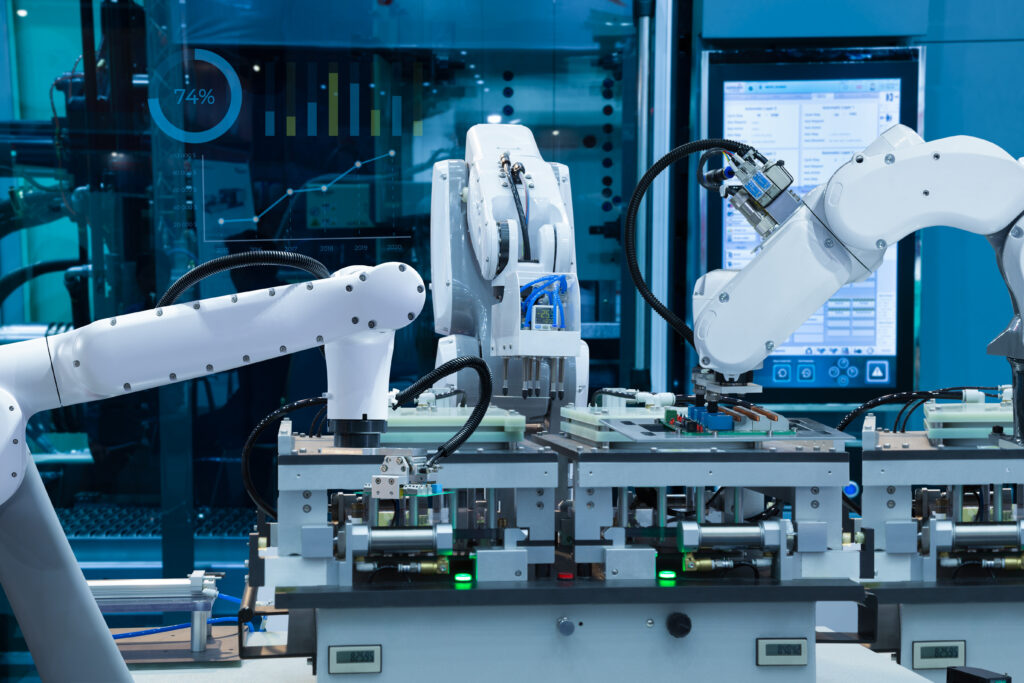
    Automated manufacturing processes have revolutionized industries by streamlining production, enhancing efficiency, and reducing operational costs. This article delves into the realm of automated manufacturing, exploring its various processes, applications, and benefits.

    Outline

    1. Introduction
    2. Background
    3. Understanding Automated Manufacturing
    4. Key Components and Technologies
    5. Applications Across Industries
    6. Advantages and Benefits
    7. Implementation Challenges
    8. Future Outlook
    9. Conclusion
    10. FAQs

    Background

    Automated manufacturing involves using advanced technologies such as robotics, artificial intelligence (AI), the Internet of Things (IoT), and machine learning to automate production processes. This section provides an overview of automated manufacturing and its evolution over time.

    Understanding Automated Manufacturing

    To achieve automated manufacturing, various components and technologies are used, including industrial robots, automated guided vehicles (AGVs), sensors, actuators, control systems, and software solutions. This section explores these key components and their roles in automated manufacturing processes.

    Key Components and Technologies

    Automated manufacturing is applied across various industries, including automotive, aerospace, electronics, pharmaceuticals, food and beverage, and consumer goods. This section highlights specific examples of automated manufacturing processes in each industry.

    Advantages and Benefits

    Automated manufacturing offers numerous advantages, such as increased efficiency, improved product quality, enhanced safety, reduced labor costs, and greater flexibility in production. This section elaborates on the significant benefits gained from automated manufacturing processes.

    Implementation Challenges

    While the advantages of automated manufacturing are substantial, implementing these processes can present challenges such as high initial investment costs, workforce training, and integration issues. This section examines common challenges and strategies to overcome them.

    Future Outlook

    The future of automated manufacturing promises continued growth and advancement. This section explores emerging trends such as collaborative automation, digitalization, additive manufacturing, and sustainable practices, shaping the future landscape of production.

    Conclusion

    In conclusion, automated manufacturing processes represent the pinnacle of modern industrial innovation, driving efficiency, productivity, and competitiveness. By embracing automation, industries can unlock new opportunities for growth, innovation, and sustainable development.

    FAQs

    1. What is automated manufacturing, and how does it work?

    Automated manufacturing refers to the use of advanced technologies in production processes, reducing human intervention and enhancing productivity. It integrates various components such as robots, sensors, actuators, and control systems to perform tasks autonomously.

    What are the advantages of automated manufacturing?

    The upsides of automated manufacturing fabrication include expanded efficiency, further developed item quality, upgraded well-being, decreased work costs, and more noteworthy adaptability during booking and customization.

    3. What industries benefit from automated manufacturing?

    Automated manufacturing production processes track down applications across many businesses, including cars, aviation, gadgets, drugs, food and refreshments, and shopper merchandise.

    4. What are the challenges associated with implementing automated manufacturing processes?

    Difficulties might include high introductory venture costs, automated manufacturing, labor force preparation, reconciliation issues, and network protection chances.

    5. What are some emerging trends in automated manufacturing?

    Emerging trends include collaborative robotics, digitalization, additive manufacturing (3D printing), sustainable automated manufacturing practices, and the integration of artificial intelligence and machine learning.

    Share.

    Related Posts

    Delta Sigma Company at AMTA 2024: Innovating Antenna Measurement Solutions

    Services

    A photo of a Compact Antenna Test Range (CATR) facility. The image shows a shielded room with an anechoic chamber, a robotic positioning system, and various measurement equipment, including spectrum analyzers and network analyzers. The control room can be seen through the glass window, where engineers and technicians can monitor the test results. CATR is used for testing and evaluating the performance of small and medium-sized antennas.

    RCS and Antenna Measurement Systems

    "An image of a modern factory utilizing automation services. The photo shows a variety of machines and equipment including robots, conveyor belts, and control systems. In the background, you can see a control room, where operators monitor and control the automation system. The factory floor is clean and well-lit, with workers in safety gear. The automation services aim to improve efficiency, reduce costs, and increase the speed and accuracy of the production process.

    Engineer to Order

    An airplane in the foreground with a projected paint masking pattern overlay, being assisted by ProjectionWorks technology. The technology is used to improve efficiency and accuracy in the paint masking process.

    Digital Thread / Digital Twin

    Editor’s Pick

    Using Machine Vision To Calibrate Countersink Depth On F-22 Aircraft

    Fuselage Rollover System

    Cargo Ramp Drill

    MENU

    • RADAR CROSS SECTION
    • FACTORY AUTOMATION
    • MIXED REALITY

    DISCOVER

    • ABOUT
    • LEARN
    • CAREERS
    • SITEMAP

    CONTACT US

    ADDRESS:
    2125 Barrett Park Dr #110
    Kennesaw, GA 30144

    PHONE:
    (770) 575 – 5100

    EMAIL
    info@deltasigmacompany.com

    FOLLOW US

    • Facebook
    • LinkedIn
    • Twitter
    • YouTube

    PRIVACY

    COPYRIGHT 2024 DELTA SIGMA COMPANY ALL RIGHTS RESERVED.

    Type above and press Enter to search. Press Esc to cancel.