What's Hot
    Facebook Twitter Instagram
    Delta Sigma CompanyDelta Sigma Company
    • About
    • Electromagnetics
    • Factory Automation
    • Mixed Reality
    • Learn
      1. Factory Automation
      2. Electromagnetics
      3. Mixed Reality
      4. Course Catalogue
      5. About
      6. View All
      7. View All

      Using Machine Vision To Calibrate Countersink Depth On F-22 Aircraft

      Fuselage Rollover System

      Cargo Ramp Drill

      Automating An Old Drill & Rivet Machine

      Delta Sigma Company at AMTA 2024: Innovating Antenna Measurement Solutions

      A Squat Cylinder-Dihedral Dual Calibration Device for Compact Ranges at UHF

      Canonical Targets in R&D RCS Measurement Range Operations

      Using the Nyquist Sampling Criteria in Antenna and RCS Measurements

      How Gulfstream Paints Aircraft Using Mixed Reality

      Delta Sigma Company Announces Partnership With Zuken USA

      Delta Sigma Company at AMTA 2024: Innovating Antenna Measurement Solutions

      Advanced Robotics Automation Tools

      Advanced Robotics Automation Tools: Revolutionizing Factory Automation Services

      Robotics Automation: Tailored Solutions

      Robotics Automation: Tailored Solutions for Modern Businesses

      Expert Robotics Automation Services

      Expert Robotics Automation Services

      Delta Sigma Company at AMTA 2024: Innovating Antenna Measurement Solutions

      Advanced Robotics Automation Tools

      Advanced Robotics Automation Tools: Revolutionizing Factory Automation Services

      Robotics Automation: Tailored Solutions

      Robotics Automation: Tailored Solutions for Modern Businesses

      Expert Robotics Automation Services

      Expert Robotics Automation Services

      Delta Sigma Company at AMTA 2024: Innovating Antenna Measurement Solutions

      Advanced Robotics Automation Tools

      Advanced Robotics Automation Tools: Revolutionizing Factory Automation Services

      Robotics Automation: Tailored Solutions

      Robotics Automation: Tailored Solutions for Modern Businesses

      Expert Robotics Automation Services

      Expert Robotics Automation Services

      Using Machine Vision To Calibrate Countersink Depth On F-22 Aircraft

      Stacker / Drill Automation

      Using Machine Vision To Assemble The F-22 Fuselage

      Automating RCS Measurements For High-Speed Production Line In-Process Verification

    CONTACT
    Delta Sigma CompanyDelta Sigma Company
    Home»Learn»Efficiency Redefined: Factory Automation Engineering
    • Factory Automation

    Efficiency Redefined: Factory Automation Engineering

    Facebook
    Twitter
    LinkedIn
    Efficiency Redefined: Factory Automation Engineering
    Efficiency Redefined: Factory Automation Engineering

    Introduction

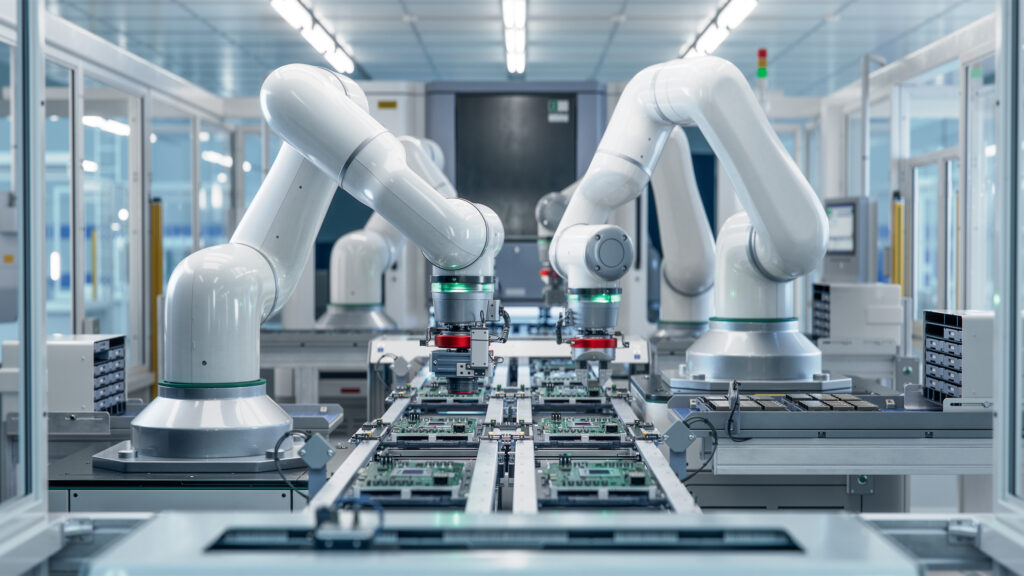
    In the domain of present-day fabricating, factory automation engineering has arisen as an impetus for reclassifying proficiency and efficiency. This article digs into the scene of factory automation engineering , investigating how it alters modern cycles and raises functional greatness.

    Outline

    1. Introduction
    2. Background
    3. Understanding Factory Automation Engineering
    4. Key Components and Technologies
    5. Benefits and Advantages
    6. Challenges and Solutions
    7. Future Perspectives
    8. Conclusion
    9. FAQS

    Background

    Understanding Factory Automation Engineering

    It envelops the plan, execution, and advancement of mechanized frameworks within assembling conditions. These frameworks influence cutting edge innovations, for example, advanced mechanics, AI, and information examination, to smooth out tasks and improve efficiency.

    Key Components and Technologies

     It depends on different key parts and innovations:

    • Industrial Robotics: Mechanical arms and computerized apparatus perform undertakings with accuracy and speed, diminishing physical work and expanding throughput.
    • Sensors and IoT Devices: Sensors gather constant information on hardware execution and ecological circumstances, empowering prescient support and interaction enhancement.
    • Control Systems: Programmable Rationale Regulators (PLCs) and Administrative Control and Information Procurement (SCADA) frameworks incorporate control and observation of assembling processes.
    • Data Analytics and AI: Progressed investigation calculations dissect creation information to uncover experiences, distinguish designs, and upgrade tasks progressively.

    Benefits and Advantages

    • Enhanced Efficiency: Computerized frameworks smooth out work processes, lessen process durations, and limit blunders, prompting expanded effectiveness and throughput.
    • Improved Quality: Automation guarantees consistency in item quality by implementing normalized processes and limiting fluctuation.
    • Cost Savings: By diminishing work costs, limiting waste, and upgrading asset use, factory automation  engineering  conveys massive expense investment funds over the long haul.
    • Safety and Compliance: Mechanized frameworks improve the working environment’s wellbeing by limiting the risk of mishaps and guaranteeing compliance with administrative guidelines.

    Challenges and Solutions

    While factory automation  engineering  brings various benefits, it likewise presents difficulties.

    • Initial Investment: The upfront expenses of carrying out automation frameworks can be huge. In any case, the drawn-out benefits frequently offset the underlying speculation.
    • Integration Complexity: Incorporating unique automation advances and inheritance frameworks can be complicated. Working with experienced integrators and taking on normalized conventions can improve joint endeavors.
    • Workforce Transition: Automation might require reskilling or upskilling the labor force to successfully work and keep up with robotized frameworks. Preparing programs and instructive drives can help with progress.

    Future Perspectives

    The fate of factory automation engineering is described by progressing development and advancement:

    • Advanced Robotics: Cooperative robots (cobots) will assume a huge part in the human-robot joint effort, working closely with human administrators to improve efficiency and adaptability.
    • Digital Twins: Advanced twin innovation will empower programmatic experiences of creation processes, taking into consideration prescient support, enhancement, and situational investigation.
    • AI-driven Optimization: AI calculations will keep on enhancing creation processes, anticipating hardware disappointments, and distinguishing amazing open doors for development.

    Conclusion

    Factory automation engineering is an extraordinary power in current assembling, driving proficiency, quality, and seriousness. By utilizing cutting-edge innovations, tending to difficulties, and embracing a culture of persistent improvement, makers can reclassify proficiency and open additional opportunities for development and advancement.

    FAQs

    1. How can small and medium-sized enterprises (SMEs) benefit from factory automation engineering?

    SMEs can profit from automation by further developing efficiency, lessening costs, and upgrading seriousness. Measured automation arrangements and versatile stages make automation available to SMEs.

    2. What are the primary considerations for selecting automation technologies for a  facility?

    Key contemplations incorporate versatility, interoperability, simplicity of joining, and profit from speculation (return on initial capital investment). Adjusting automation  systems to business targets and functional requirements is fundamental.

    3. What role does data analytics play in factory automation engineering?

    Information examination empowers ongoing observation, prescient support, and execution improvement in robotized production conditions. Dissecting creation information recognizes failures, upgrade cycles, and ceaseless improvement drives.

    Share.

    Related Posts

    Delta Sigma Company at AMTA 2024: Innovating Antenna Measurement Solutions

    Services

    A photo of a Compact Antenna Test Range (CATR) facility. The image shows a shielded room with an anechoic chamber, a robotic positioning system, and various measurement equipment, including spectrum analyzers and network analyzers. The control room can be seen through the glass window, where engineers and technicians can monitor the test results. CATR is used for testing and evaluating the performance of small and medium-sized antennas.

    RCS and Antenna Measurement Systems

    "An image of a modern factory utilizing automation services. The photo shows a variety of machines and equipment including robots, conveyor belts, and control systems. In the background, you can see a control room, where operators monitor and control the automation system. The factory floor is clean and well-lit, with workers in safety gear. The automation services aim to improve efficiency, reduce costs, and increase the speed and accuracy of the production process.

    Engineer to Order

    An airplane in the foreground with a projected paint masking pattern overlay, being assisted by ProjectionWorks technology. The technology is used to improve efficiency and accuracy in the paint masking process.

    Digital Thread / Digital Twin

    Editor’s Pick

    Using Machine Vision To Calibrate Countersink Depth On F-22 Aircraft

    Fuselage Rollover System

    Cargo Ramp Drill

    MENU

    • RADAR CROSS SECTION
    • FACTORY AUTOMATION
    • MIXED REALITY

    DISCOVER

    • ABOUT
    • LEARN
    • CAREERS
    • SITEMAP

    CONTACT US

    ADDRESS:
    2125 Barrett Park Dr #110
    Kennesaw, GA 30144

    PHONE:
    (770) 575 – 5100

    EMAIL
    info@deltasigmacompany.com

    FOLLOW US

    • Facebook
    • LinkedIn
    • Twitter
    • YouTube

    PRIVACY

    COPYRIGHT 2024 DELTA SIGMA COMPANY ALL RIGHTS RESERVED.

    Type above and press Enter to search. Press Esc to cancel.