What's Hot
    Facebook Twitter Instagram
    Delta Sigma CompanyDelta Sigma Company
    • About
    • Electromagnetics
    • Factory Automation
    • Mixed Reality
    • Learn
      1. Factory Automation
      2. Electromagnetics
      3. Mixed Reality
      4. Course Catalogue
      5. About
      6. View All
      7. View All

      Using Machine Vision To Calibrate Countersink Depth On F-22 Aircraft

      Fuselage Rollover System

      Cargo Ramp Drill

      Automating An Old Drill & Rivet Machine

      Delta Sigma Company at AMTA 2024: Innovating Antenna Measurement Solutions

      A Squat Cylinder-Dihedral Dual Calibration Device for Compact Ranges at UHF

      Canonical Targets in R&D RCS Measurement Range Operations

      Using the Nyquist Sampling Criteria in Antenna and RCS Measurements

      How Gulfstream Paints Aircraft Using Mixed Reality

      Delta Sigma Company Announces Partnership With Zuken USA

      Delta Sigma Company at AMTA 2024: Innovating Antenna Measurement Solutions

      Advanced Robotics Automation Tools

      Advanced Robotics Automation Tools: Revolutionizing Factory Automation Services

      Robotics Automation: Tailored Solutions

      Robotics Automation: Tailored Solutions for Modern Businesses

      Expert Robotics Automation Services

      Expert Robotics Automation Services

      Delta Sigma Company at AMTA 2024: Innovating Antenna Measurement Solutions

      Advanced Robotics Automation Tools

      Advanced Robotics Automation Tools: Revolutionizing Factory Automation Services

      Robotics Automation: Tailored Solutions

      Robotics Automation: Tailored Solutions for Modern Businesses

      Expert Robotics Automation Services

      Expert Robotics Automation Services

      Delta Sigma Company at AMTA 2024: Innovating Antenna Measurement Solutions

      Advanced Robotics Automation Tools

      Advanced Robotics Automation Tools: Revolutionizing Factory Automation Services

      Robotics Automation: Tailored Solutions

      Robotics Automation: Tailored Solutions for Modern Businesses

      Expert Robotics Automation Services

      Expert Robotics Automation Services

      Using Machine Vision To Calibrate Countersink Depth On F-22 Aircraft

      Stacker / Drill Automation

      Using Machine Vision To Assemble The F-22 Fuselage

      Automating RCS Measurements For High-Speed Production Line In-Process Verification

    CONTACT
    Delta Sigma CompanyDelta Sigma Company
    Home»Learn»The Power of Precision: PLC Programming in Automation
    • Factory Automation

    The Power of Precision: PLC Programming in Automation

    Facebook
    Twitter
    LinkedIn
    The Power of Precision: PLC Programming in Automation
    The Power of Precision: PLC Programming in Automation

    Introduction

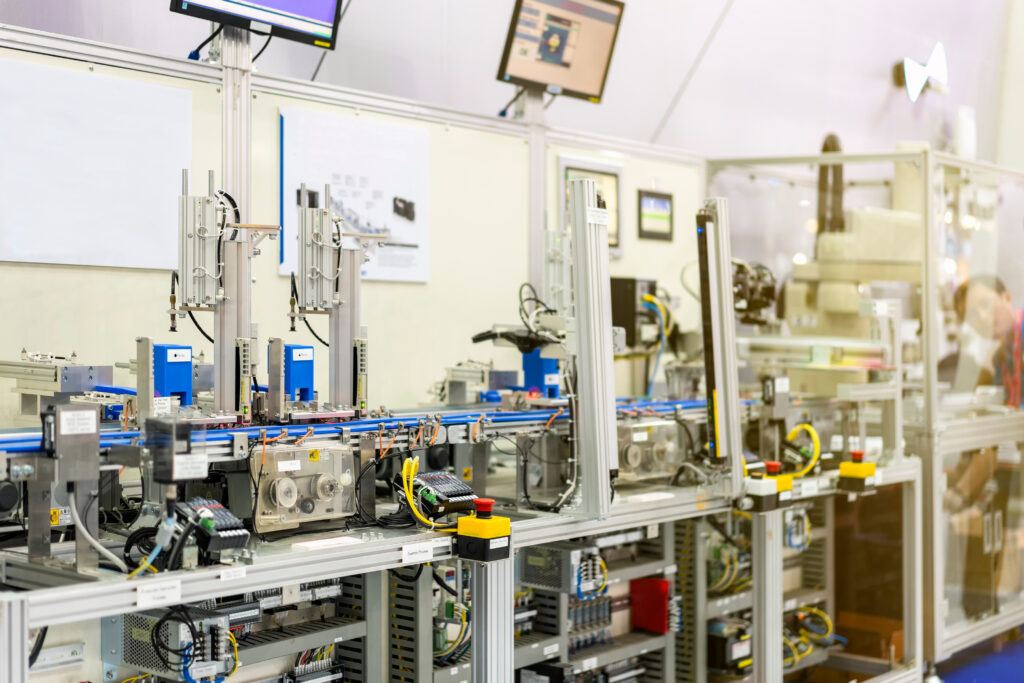
    In the domain of automation, Programmable Rationale Regulators (PLCs) assume a crucial role in organizing complex assembly processes with unmatched accuracy and productivity. This article digs into the meaning of PLC programming in automation, featuring its extraordinary effect on present-day modern activities.

    Outline

    1. Introduction
    2. Background
    3. Understanding Programmable Logic Controllers (PLCs)
    4. Importance of PLC Programming in Automation
    5. Key Components of PLC Systems
    6. PLC Programming Languages
    7. Applications of PLC Programming
    8. Challenges and Considerations
    9. Future Trends in PLC Programming
    10. Conclusion
    11. FAQs

    Background

    Programmable Logic Controllers (PLCs) are the core of PLC programming technology, acting as the brains behind automated systems in various industries. Understanding the basics of PLC programming is essential for grasping its crucial role in streamlining manufacturing processes and improving efficiency.

    Understanding Programmable Logic Controllers (PLCs)

    PLCs are specialized computing devices designed to control and monitor industrial machinery and processes. They follow logic-based instructions to automate tasks typically done by human operators, ensuring precision and reliability in manufacturing operations.

    Importance of PLC Programming in Automation

    PLC programming allows engineers to design control algorithms that manage automated systems. By programming PLCs, manufacturers can achieve seamless integration of equipment, real-time monitoring, and precise task execution, leading to improved efficiency and quality.

    Key Components of PLC Systems

    PLC systems consist of several key components, including input/output modules, central processing units (CPUs), memory units, communication interfaces, and software. Each component plays a crucial role in the functionality and performance of the PLC system.

    PLC Programming Languages

    PLC programming languages vary based on the manufacturer and application requirements. Common programming languages include ladder logic, function block diagram (FBD), structured text (ST), and sequential function chart (SFC), each suited for different programming tasks and preferences.

    Applications of PLC Programming

    PLC programming tracks down broad applications across assorted ventures, including producing, cars, drugs, food handling, and energy. From controlling creation lines to managing temperature and strain in modern cycles, PLCs empower the exact mastering of PLC programming in different applications.

    Challenges and Considerations

    While PLC programming offers many benefits, it also comes with challenges such as complexity in programming, troubleshooting, and system integration. Addressing these challenges requires specialized skills, thorough testing, and continuous improvement to ensure optimal performance.

    Future Trends in PLC Programming

    The eventual fate of PLC programming holds energizing prospects, with progressions in regions like cloud networks, edge processing, and AI. These patterns vow to upgrade the abilities of PLCs, empowering more brilliant and versatile mastering PLC programming answers for Business 4.0.

    Conclusion

    PLC programming is a cornerstone of modern automation, enabling industries to achieve high levels of precision, efficiency, and reliability in manufacturing processes. By using PLC technology and adopting emerging trends, businesses can unlock new opportunities for growth and competitiveness in a fast-changing environment.

    FAQs

    1. What is PLC programming, and why is it important in automation?

    PLC programming includes making rationale-based guidelines to control modern apparatus and cycles, guaranteeing productive and dependable mastering of PLC programming.

    2. What are the main components of a PLC system? 

    Key parts incorporate information/yield modules, focal handling units (central processors), memory units, correspondence connection points, and programming.

    3. Which programming languages are commonly used in PLC programming? 

    Common languages include ladder logic, function block diagrams (FBD), structured text (ST), and sequential function charts (SFC), each suitable for specific programming tasks.

    4. What are some typical applications of PLC programming?

    Modern PLC programming uses logic-based design in various industries for tasks like controlling production lines, setting equipment parameters, and real-time monitoring of industrial processes.

    5. What challenges do engineers face when programming PLCs?

    Difficulties might include intricacy in programming, investigating, framework combination, and staying aware of advancing advancements.


    Share.

    Related Posts

    Delta Sigma Company at AMTA 2024: Innovating Antenna Measurement Solutions

    Services

    A photo of a Compact Antenna Test Range (CATR) facility. The image shows a shielded room with an anechoic chamber, a robotic positioning system, and various measurement equipment, including spectrum analyzers and network analyzers. The control room can be seen through the glass window, where engineers and technicians can monitor the test results. CATR is used for testing and evaluating the performance of small and medium-sized antennas.

    RCS and Antenna Measurement Systems

    "An image of a modern factory utilizing automation services. The photo shows a variety of machines and equipment including robots, conveyor belts, and control systems. In the background, you can see a control room, where operators monitor and control the automation system. The factory floor is clean and well-lit, with workers in safety gear. The automation services aim to improve efficiency, reduce costs, and increase the speed and accuracy of the production process.

    Engineer to Order

    An airplane in the foreground with a projected paint masking pattern overlay, being assisted by ProjectionWorks technology. The technology is used to improve efficiency and accuracy in the paint masking process.

    Digital Thread / Digital Twin

    Editor’s Pick

    Using Machine Vision To Calibrate Countersink Depth On F-22 Aircraft

    Fuselage Rollover System

    Cargo Ramp Drill

    MENU

    • RADAR CROSS SECTION
    • FACTORY AUTOMATION
    • MIXED REALITY

    DISCOVER

    • ABOUT
    • LEARN
    • CAREERS
    • SITEMAP

    CONTACT US

    ADDRESS:
    2125 Barrett Park Dr #110
    Kennesaw, GA 30144

    PHONE:
    (770) 575 – 5100

    EMAIL
    info@deltasigmacompany.com

    FOLLOW US

    • Facebook
    • LinkedIn
    • Twitter
    • YouTube

    PRIVACY

    COPYRIGHT 2024 DELTA SIGMA COMPANY ALL RIGHTS RESERVED.

    Type above and press Enter to search. Press Esc to cancel.